A framework for sustainable agriculture
The Vision is evolving as a framework designed to remain workable today, adaptable tomorrow, and viable towards 2040..... Read More
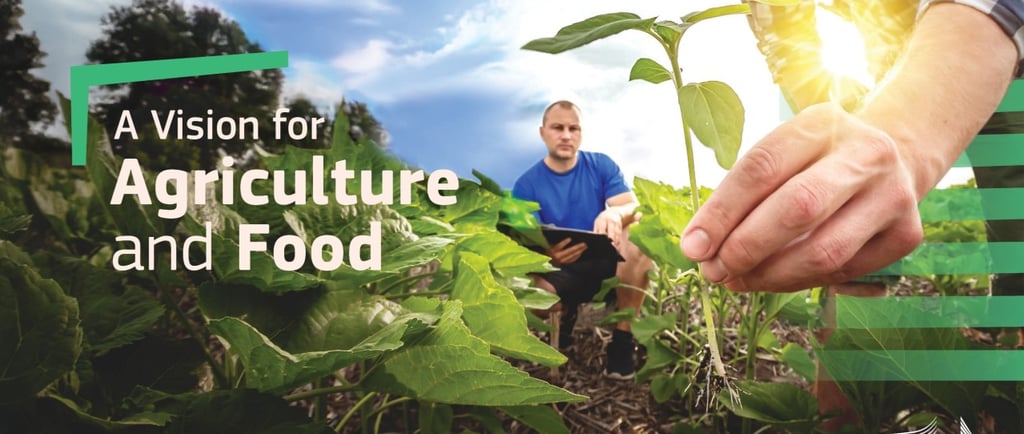
One year after the European Commission presented its Vision for Agriculture and Food, the emphasis is on what has been delivered and how the framework is evolving in practice, guided by continued dialogue with farmers, food businesses and other stakeholders across the value chain.
Farmers and agri-food businesses across the EU operate under increasingly challenging conditions. Rising costs, climate-related risks and geopolitical uncertainty have become part of daily decision-making in a sector that must plan for the long term while responding to immediate pressures. The Vision was developed in this context not as an abstract strategy, but as a framework intended to work under real conditions to support a sector that remains essential for Europe’s economy, food security and rural life.
Turning the Vision into action
The Vision rests on a clear understanding: agriculture can only remain viable in the long term if farmers are fairly and stably remunerated. This is why it combines public support with measures that strengthen market functioning and transparency.
Public support through the Common Agricultural Policy remains essential, particularly for farmers exposed to volatility or structural constraints. The Commission has therefore secured significant funding for the CAP in the proposed 2028–2034 Multiannual Financial Framework, providing continuity and predictability for investment and planning.
At the same time, progress has been made on improving how markets work. Over the past year, action against unfair trading practices has been reinforced, adjustments to the Common Market Organisation have been advanced, and transparency tools such as the EU Agri-Food Chain Observatory have been strengthened. Together, these measures aim to improve value distribution along the food chain and reduce situations in which farmers carry disproportionate burden when markets fluctuate.
New income opportunities are also being developed. The Bioeconomy Strategy adopted in 2025 reflects efforts to support innovation and diversify income beyond traditional production, while recognising the multiple roles farmers play in managing land and resources.
The focus on making farming an attractive career has been reinforced by the launch of the Strategy for Generational Renewal in Agriculture, which addresses access to income, land, skills, and sets the right conditions to support young farmers and new entrants into the sector.
Simplification to support competitiveness
Competitiveness depends not only on market conditions, but also on the regulatory environment. For many farmers and agri-food operators, administrative requirements translate into time away from production, delayed investment decisions or additional costs absorbed at farm level. The Commission has therefore advanced several simplification packages on rules affecting the CAP implementation, environmental reporting and food and feed legislation.
These measures are expected to reduce administrative burden and free up time and resources for productive activity and investment. The aim is straightforward: to create a more business-friendly environment while maintaining European standards.
Providing stability in an uncertain context
Recent years have shown how exposed agriculture is to external shocks, from climate extremes to market disruptions and geopolitical tensions. For those operating on tight margins, sudden shocks can quickly threaten viability.
The Vision therefore places strong emphasis on protection, preparedness and resilience. Work has progressed on strengthening crisis response and risk management tools. Proposals such as the Unity Safety Net in the next Multiannual Financial Framework are intended to provide additional protection when markets shocks occur. At the same time, flexibility remains important. Safeguard clauses in trade agreements, calibrated implementation of sustainability requirements and targeted action on fertiliser markets are designed to maintain policy direction while avoiding abrupt disruption in supply for farmers and businesses.
The Vision continues
The next phase will focus on consolidating measures already delivered, advancing pending initiatives — including further steps on unfair trading practices, risk management, the establishment of a farmland observatory — and refining instruments where needed, in continued dialogue with Member States, farmers, food businesses and other stakeholders across the value chain. The EU agri-food sector has many strengths and is a leader when it comes to quality, safety and sustainability, and innovation in food production. The European Union, with Member States, farmers and the agri-food sector, must build on these strengths and sharpen responses to the challenges farmers and the sector are facing. Together, we are advancing towards an agrifood sector which is attractive, competitive, future-proof and fair for current and future generations.
Learn more about the Vision for Agriculture and Food: https://agriculture.ec.europa.eu/overview-vision-agriculture-food/vision-agriculture-and-food_en
Ruralities Living Lab for Resilient Rural Communities
Sustainability in Rural Enterprises and Innovation
A member of the Social Innovation Stakeholders Network - www.SocialInnovationActions.Org
Social Innovation Actions - PIC 878506012