The Changing Dynamics of Rural Europe
Fifty years ago, my village was a thriving hub of typical rural life.....
What Happened to Our Rural Heartlands?
Every Tuesday and Thursday, our little group of seven gathers at the public gym where we stretch, breathe, and follow the quiet rhythm of pilates and yoga, as if holding time in place for just a moment. Afterwards, we sit together over coffee. The conversation begins lightly, as it always does—chit chat about daily routines, family so far away laughter that comes easily. But lately, something shifts. The tone softens, deepens. Without deciding to, we find ourselves turning back—toward the village as it once was. There is a pause between words, a shared recognition.,,, a kind of quiet mourning. Fifty years ago, this was a different place. As a newbie to the group, it was fascinating to hear the stories, not just of living here but of growing up within it, together. The schoolyard was never still. It echoed with voices, games, and the joy of childhood. The teacher knew every family, every story, every name. And just beyond the classroom walls, the smell of warm bread from the bakery would drift through the air, folding learning into the fabric of everyday life. Nothing was separate then..... not school from home, nor work from community. The fields stretched outward, worked from dawn to dusk, marking the passage of time more faithfully than any clock. The cheese factory hummed at the heart of it all—a steady, reassuring presence. Shops opened their doors each morning, not just for business, but for connection. Life moved with a rhythm that belonged to everyone.
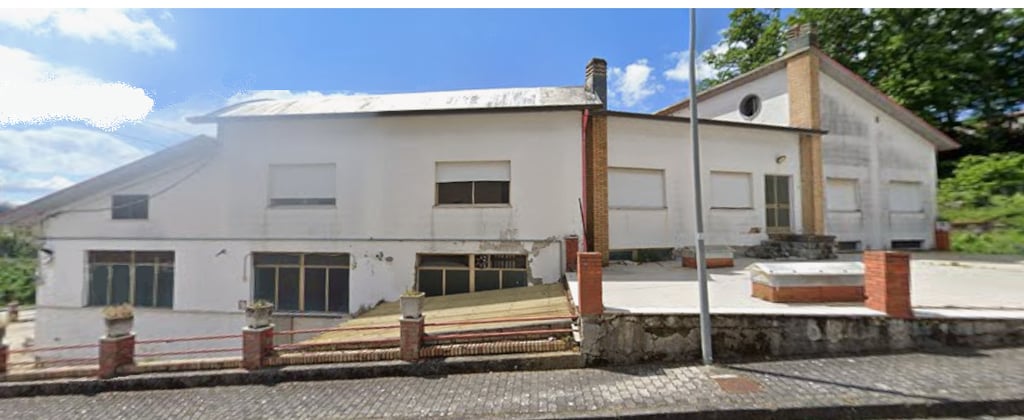
Life in the countryside was not only busy - it was whole. And in that wholeness, there was purpose that was shared, understood, unquestioned. Today, my village tells a different story. From over 5,000 people, the population has fallen to just 856. Vacant houses line the streets—silent reminders of families who left in search of opportunity elsewhere. The local cheese factory, once the economic heartbeat of the community, stands shuttered. The silence is most visible in the absence of children. The schoolyard is empty now. The doors are closed—not just for lack of students, but perhaps for lack of teachers. The few children who remain must travel to the next village each day, leaving behind what was once the center of community life. With every journey outward, something inward is lost.
This is not just the story of one village. It is the story of many Ruralities across Europe.
More than decline—an unfinished transition
Across the EU, rural areas cover over 80% of the territory and are home to millions—yet many face population decline, ageing communities, and shrinking local economies. But to call this simply “decline” is to miss the point. Rural areas are not empty. They are under-connected. Beneath the surface, there remains:
deep-rooted knowledge that used to pass through generations
landscapes shaped by centuries of stewardship
communities that still carry identity, memory, and resilience
The real challenge is not the absence of value— but the absence of connection between that value and opportunity. What if Ruralities were no longer seen as places left behind — but as places that can lead the transition to a more sustainable future? Places where:
food systems are local, transparent, and regenerative
tourism strengthens identity rather than diluting it
digital tools connect rural businesses to global markets
nature is managed as a shared asset, not a depleted resource
This is not a return to the past. It is a re-imagining of the rural economy. Aligned with the vision of the EU Rural Pact, the future of rural areas lies in making them stronger, connected, resilient, and prosperous.
Rebuilding Ruralities
The story of my village is not just about loss; It is about broken links: between generations, between knowledge and markets, and between local identity and global opportunity. Rebuilding Ruralities means reconnecting:
people with skills, purpose, and future pathways
businesses with sustainable and diversified models
communities with each other and with wider networks
This is where learning, collaboration, and innovation become essential — not as abstract ideas, but as practical tools for renewal. Voices from Ruralities exists to share these stories. Not only stories of what has been lost—
but stories of what is being rebuilt. Across Europe, we already see:
farms evolving into agrotourism destinations
local products reaching new markets through digital platforms
young people returning with new ideas and skills
communities experimenting with new forms of collaboration
These are not isolated examples. They are early signals of a wider transformation.
From memory to momentum
The schoolyard I remember may be empty today. But it does not have to remain so. The future of Ruralities depends on whether we can:
reconnect knowledge and opportunity
invest in people and place
and create conditions where the next generation chooses not to leave—but to stay, return, and build
Because rural areas are not the past. They are a vital part of Europe’s future. And that future begins by listening— to the voices from Ruralities.
Ruralities Living Lab for Resilient Rural Communities
Sustainability in Rural Enterprises and Innovation
A member of the Social Innovation Stakeholders Network - www.SocialInnovationActions.Org
Social Innovation Actions - PIC 878506012