Unlocking regional bioeconomy transitions
Co-creation, stakeholder engagement, and systemic change in rural Europe
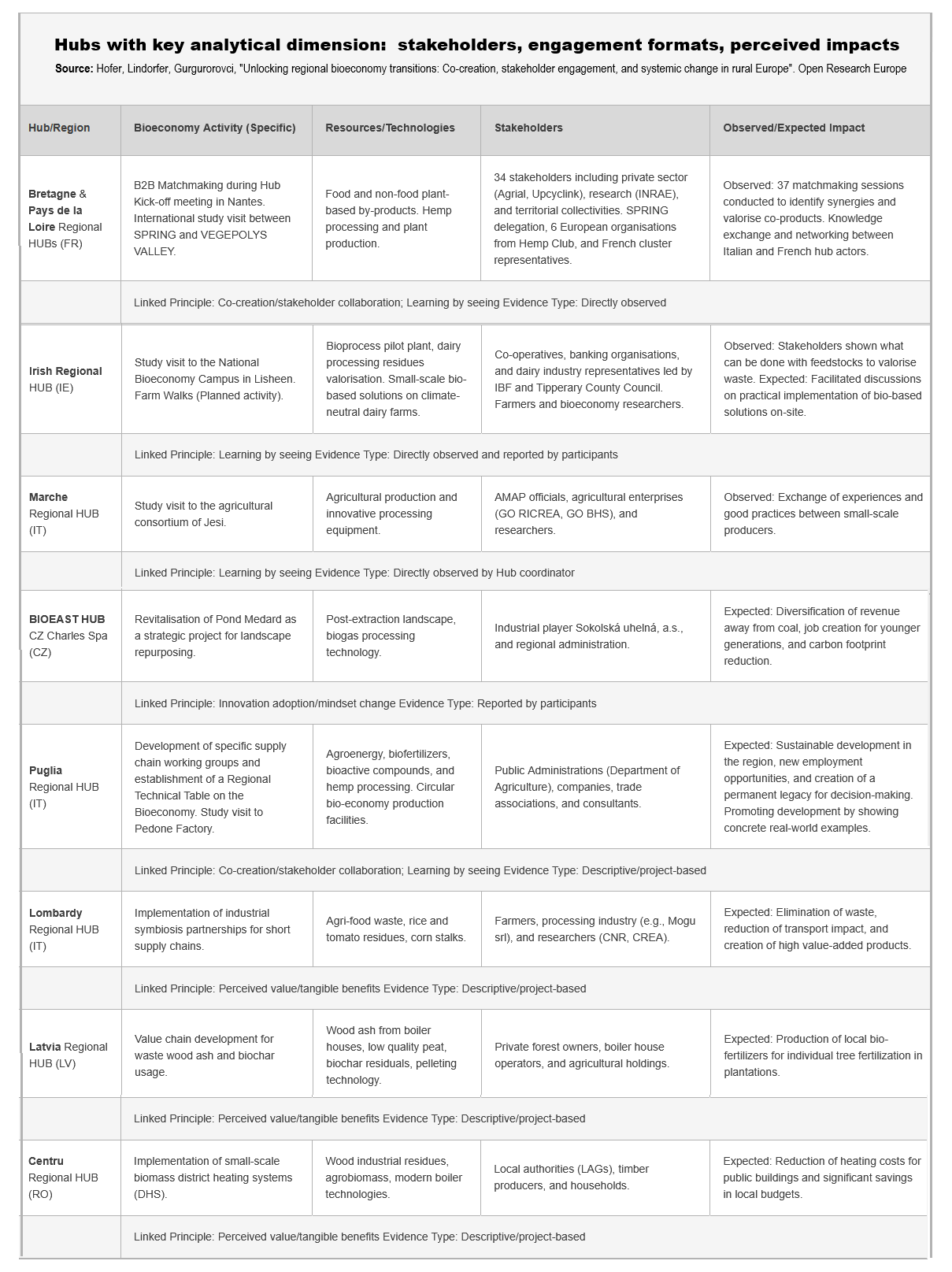
Across Europe, many rural areas are trying to move toward a more sustainable economy that makes use of local natural resources instead of relying on fossil fuels. This shift is called the bioeconomy. To support this change, the RuralBioUp project (2022–2025) created nine regional bioeconomy hubs in different European countries. These hubs are spaces where farmers, businesses, researchers, community groups, and local authorities can come together to share ideas and create solutions that fit their region.
The Open Research Europe study, "Unlocking regional bioeconomy transitions: Co-creation, stakeholder engagement, and systemic change in rural Europe", looks at what worked well and what did not, when setting up and running these hubs. The authors found that people were most willing to participate when activities felt useful, practical, and close to their daily lives. For example, visiting real-life bioeconomy projects, holding training sessions in local languages, and organizing events with local partners made a big difference. In contrast, generic online workshops in English or activities with heavy paperwork often discouraged participation.
Trust and personal connections proved essential. Hubs led by local facilitators who knew the community built more credibility and involvement than those relying on outside experts. Success also depended on showing clear benefits, such as new funding opportunities for bioeconomy initiatives, recognition, or business contacts.
Introducing innovation in traditional rural areas takes time. People are more open to new ideas when they see them as a natural extension of what they already know, rather than as something completely new. Peer-to-peer learning for example, farmers learning from other farmers, was especially effective.
Overall, the authors concluded that bioeconomy hubs can become engines of sustainable rural development if they are locally grounded, trust-based, and adapted to community values and needs. Instead of one-size-fits-all approaches, patient, bottom-up strategies are key to long-lasting change.
Ruralities Living Lab for Resilient Rural Communities
Sustainability in Rural Enterprises and Innovation
A member of the Social Innovation Stakeholders Network - www.SocialInnovationActions.Org
Social Innovation Actions - PIC 878506012